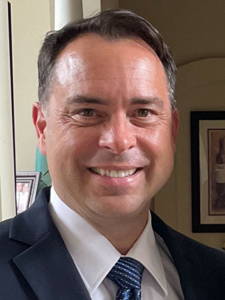
David Sinclair is probably the best-known longevity scientist in the world. He's a Harvard Medical School geneticist, a bestselling author, a frequent podcast guest and the host of his own podcast, Lifespan with Dr. David Sinclair. As the author of this post, I'll say up front that I'm a huge fan of that show. His ideas about aging also show up in a lot of supplement marketing. AI is now showing up in the same conversations. This guide separates three things that tend to get blended together: what Sinclair has said publicly, what published studies actually show, and what a supplement can realistically do. We'll also cover where AI really fits in aging research, and what you can do with it today.
Key Takeaways
- Sinclair's central idea, the "information theory of aging," says that loss of epigenetic information is a driver of aging. It's an influential hypothesis, and it's also debated.
- Much of the evidence behind it comes from cells and mice. Human trials of NAD+ precursors like NR and NMN have mostly shown higher NAD+ levels, with mixed results beyond that.
- Resveratrol's role as a "sirtuin activator" has been challenged in the literature, so it's best described as a well-studied plant compound and not a proven longevity switch.
- AI is most useful in aging research today for finding patterns in large datasets, like biological-age "clocks." It isn't a way to extend life by itself.
- Movement, sleep and how you eat have far more evidence behind them than any supplement. Supplements are an add-on, if you choose them at all.
Who David Sinclair is
Sinclair is a professor of genetics at Harvard Medical School and co-director of the Paul F. Glenn Center for Biology of Aging Research there. Harvard's Glenn Center page says his lab has provided evidence that epigenetic changes are a conserved cause of aging. In 2019 he and writer Matthew LaPlante published Lifespan: Why We Age, and Why We Don't Have To, which reached number 11 on the New York Times bestseller list, according to Boston Magazine's coverage that year. He has also been involved with a number of companies, and his published papers include detailed conflict-of-interest statements listing consulting and board roles. We'll come back to that, because it's part of reading the research fairly.
The core idea, in plain English
Your cells all carry the same DNA, but a layer of chemical markings on top, called the epigenome, tells each cell which genes to use. A skin cell and a neuron have the same genes. They behave differently because of the epigenome. Sinclair's "information theory of aging" proposes that, over time, those markings get scrambled, and that this loss of epigenetic information is a driver of aging, one that may be reversible.
In a 2023 paper in Cell, his team reported on a mouse system they call "ICE" (inducible changes to the epigenome). They found that faithful DNA repair advanced aging in the mice at physiological, cognitive and molecular levels, including erosion of the epigenetic landscape, and that these changes could be reversed by a reprogramming approach. The authors described the data as consistent with the information theory of aging. Another 2023 paper, in Aging, reported six chemical cocktails that restored a younger gene-expression profile in cultured human cells in under a week.
Those are experiments in mice and in cells in a dish. They aren't human trials, and neither one tests a dietary supplement. That's worth holding onto.
Where the hypothesis sits in the wider field
The most-cited framework in the field is a 2023 update to the "hallmarks of aging" in Cell, which proposes twelve hallmarks, including epigenetic alterations, mitochondrial dysfunction, deregulated nutrient-sensing and cellular senescence. Epigenetic change is one hallmark among several. Most researchers treat these as interconnected, and few would say any single one explains everything.
NAD+ and sirtuins: why supplement companies bring them up
Sirtuins are a family of enzymes that need NAD+ to work. A 2021 review from the Buck Institute describes NAD+ as a central coenzyme for energy metabolism and a required partner for sirtuins, and says NAD+ levels appear to decline with age in multiple model organisms including humans. The same review also lists what's still unknown: how to restore levels effectively, whether doing so is safe, and whether it helps people as they age.
That's why NAD+ precursors became a popular topic. In mice, a 12-month study found that NMN was well utilized to make NAD+ and was linked to a range of favorable changes during normal aging (Mills et al., Cell Metabolism, 2016). In people, the picture is quieter:
- A 6-week crossover trial found that nicotinamide riboside (NR) was well tolerated and raised NAD+ in middle-aged and older adults (Martens et al., 2018).
- A trial in healthy older men found 250 mg a day of NMN raised blood NAD+. Small changes in walking speed and grip strength were reported as nominal and in need of confirmation in larger studies (Igarashi et al., 2022).
- Trials in adults with obesity found NR raised markers of NAD+ production but didn't improve insulin sensitivity (Dollerup 2018; Remie 2020).
We break down all of these in our guide to NAD+ vs NMN vs NR, and explain the basics in What Is NAD+?. One thing to be clear about: OPA NAD+ is a nicotinamide riboside formula, which makes it an NAD+ precursor, not NAD+ itself. Each two-capsule serving has 500 mg of NR chloride, 150 mg of trans-resveratrol and 50 mg of quercetin, and it's designed for antioxidant support.*

Resveratrol: a famous idea with a complicated history
Sinclair was a co-author on the 2003 Nature paper reporting that resveratrol, a polyphenol found in red wine, activated a sirtuin in lab tests and extended the lifespan of yeast. In 2006 a team that included him reported in Nature that resveratrol improved health and survival in mice on a high-calorie diet. Both papers were hugely influential.
Then came the pushback. A 2010 paper in the Journal of Biological Chemistry found that resveratrol and related compounds did not directly activate SIRT1 when tested with native substrates, and that the earlier signal appeared to depend on a fluorescent tag used in the assay. The debate over how resveratrol works hasn't been fully settled, and we don't think anyone should present it as a proven way to slow aging. What can be said is that it's a well-studied plant compound, found in grapes and in Japanese knotweed, and it's the reason we include trans-resveratrol in OPA NAD+ and also sell OPA Resveratrol 600 mg, a 50% trans-resveratrol extract, for antioxidant support.* If you want background on polyphenols in general, see the role of polyphenols in aging.
What Sinclair has said publicly versus what the evidence shows
This is the part most pages skip. The table below sets out public statements and what we found in the published research. It isn't a verdict on any person. It's a way to keep the two apart.
| What has been said publicly | What the research shows |
|---|---|
| Aging is driven by loss of epigenetic information and may be reversible (the information theory of aging) | Supported in a mouse model and in cultured cells by his lab's 2023 papers. Not shown in humans. Other researchers dispute it. |
| NAD+ precursors like NMN are worth taking | Human trials show higher NAD+ levels. Outcomes beyond that are mixed or small, and trials are short. |
| Resveratrol activates sirtuins | Reported in 2003 lab work. A 2010 study challenged the way it was measured. Still debated. |
| Personal routine: Boston Magazine reported in 2019 that he takes resveratrol and NMN each morning, along with vitamin D, vitamin K2 and aspirin, and a diabetes drug | A personal routine isn't a study. We aren't recommending it. Any prescription drug is a conversation for you and your doctor. |
The criticism, and why it matters
A fair guide has to include the other side. Biochemist Charles Brenner published a critical review of Lifespan in Archives of Gerontology and Geriatrics in 2023. Among other points, he argues that the sirtuin-activator claims for resveratrol rest on an assay artifact, and he raises concerns about people copying the book's regimen. Other researchers have also questioned how well sirtuins qualify as conserved longevity genes.
It's also fair to note the money. Sinclair's papers list consulting, board and investor roles in a long list of companies, including some involved in NMN and in reprogramming. Published coverage notes that Brenner is a scientific advisor to a company that makes a nicotinamide riboside product. Neither of those facts tells you who's right. They're a reason to look at the underlying studies and to be wary of anyone, on any side, who sounds completely certain. We make an NR-based product ourselves, so you should apply the same skepticism to us.

Where AI actually fits in longevity research
AI is most useful in aging research as a pattern-finder. Here are the main ways it's used.
- Aging clocks. In 2013, Steve Horvath published a multi-tissue DNA methylation predictor of age, built from about 8,000 samples. It's the best-known "epigenetic clock." Later work applied deep learning to larger sets of measurements to build "deep aging clocks."
- Biomarker research. A 2019 review in Aging describes how deep learning can be used to estimate biological age and to evaluate whether an intervention changes it. The authors work for a longevity-focused biotech, which they disclose.
- Drug and target discovery. The same review covers use of AI to identify therapeutic targets in pharmaceutical research.
The limits are real. A clock estimates something correlated with age. It doesn't prove that changing the number changes how long or how well you live, and different clocks can give different answers for the same person. AI won't extend a life by itself. It helps researchers measure and find things faster.
How people use AI and data day to day
For most people, this looks like wearables that track sleep and activity, lab results you can review with a clinician, and chat tools that help you understand your own numbers. These can be useful for noticing trends. They're not a substitute for a doctor, and a consumer "biological age" score should be read as a rough estimate. If a tool tells you to start or stop a medicine, take that to a clinician instead of acting on it.

The basics that have the most evidence
If you only do the unglamorous things, you've done most of what the research supports.
- Move regularly. Exercise is one of the best-studied ways to look after your cells' energy systems. See best exercise to increase mitochondria.
- Eat a varied, plant-forward diet. Our post on diet and longevity covers what population research does and doesn't show, and nutrition for healthy aging is a practical guide for adults over 60.
- Look at eating patterns. Calorie intake and fasting windows are active research areas. We've covered them in caloric restriction and longevity and the benefits of intermittent fasting. If you follow a fasting routine and want a supplement to go with it, OPA Fast Berberine Plus is a 1,200 mg berberine HCl blend made for that kind of routine.* Check with your clinician first if you take any medicine.
- Protect your sleep. It's the least glamorous and probably the most underrated item here.

OPA NAD+ (60 capsules) is a nicotinamide riboside formula with trans-resveratrol and quercetin. It is an NAD+ precursor, not NAD+ itself.
Where supplements fit
A supplement is an add-on to those habits, not a replacement. If you decide to try one, read the label closely. Check which ingredient it actually contains, how much per serving, and what the price per day works out to. We walk through that in our NAD+ guide. And remember that our wording is "supports," not "fixes." Nothing we sell is intended to diagnose, treat, cure or prevent a disease.
Who should talk to a clinician first
Pregnant or nursing, under 18, taking prescription medicine, or managing a health condition? Talk to your doctor or pharmacist before starting any supplement, including NR, NMN, resveratrol or berberine, and bring the bottle. That's especially true if you're thinking of copying anyone's personal regimen.
FAQ
Which supplements does David Sinclair take?
In a 2019 profile, Boston Magazine reported that he takes resveratrol, NMN and a diabetes drug each morning, plus vitamin D, vitamin K2 and aspirin. That's a personal routine reported in the press. It's not a study, and we aren't recommending it.
Does NMN increase longevity?
No human trial has shown that. Studies in people have shown NMN raises blood NAD+ levels over weeks to months. A 12-month mouse study reported favorable physiological changes, but mice aren't people.
Can AI extend human life?
Not on its own. AI helps researchers build aging clocks, analyze large datasets and find drug targets. Whether any of that leads to longer or healthier lives is still being tested.
What is an epigenetic clock?
It's a model that estimates biological age from DNA methylation patterns. Horvath's 2013 version used 353 sites in the genome. It's a research tool, and individual results can differ between clocks.
Is resveratrol worth taking?
That's a personal call, and the evidence is mixed. It's a well-studied plant compound, and its role as a sirtuin activator is debated. We offer it for antioxidant support, and we suggest talking with a clinician first, particularly if you take medicine.*
Is OPA NAD+ the same as what David Sinclair takes?
We have no connection to Dr. Sinclair, and he hasn't endorsed any OPA product. OPA NAD+ is a nicotinamide riboside formula with trans-resveratrol and quercetin. It's an NAD+ precursor formula, not NAD+ itself.
Sources
- Harvard Glenn Center for Biology of Aging Research, David Sinclair lab summary.
- Boston Magazine, Has Harvard's David Sinclair Found the Fountain of Youth? (2019).
- Yang JH, et al. Loss of epigenetic information as a cause of mammalian aging. Cell. 2023.
- Yang JH, et al. Chemically induced reprogramming to reverse cellular aging. Aging. 2023.
- López-Otín C, et al. Hallmarks of aging: An expanding universe. Cell. 2023.
- Covarrubias AJ, et al. NAD+ metabolism and its roles in cellular processes during ageing. Nat Rev Mol Cell Biol. 2021.
- Howitz KT, et al. Small molecule activators of sirtuins extend Saccharomyces cerevisiae lifespan. Nature. 2003.
- Baur JA, et al. Resveratrol improves health and survival of mice on a high-calorie diet. Nature. 2006.
- Pacholec M, et al. SRT1720, SRT2183, SRT1460, and resveratrol are not direct activators of SIRT1. J Biol Chem. 2010.
- Mills KF, et al. Long-term administration of nicotinamide mononucleotide mitigates age-associated physiological decline in mice. Cell Metab. 2016.
- Martens CR, et al. Chronic nicotinamide riboside supplementation is well-tolerated and elevates NAD+ in healthy middle-aged and older adults. Nat Commun. 2018.
- Igarashi M, et al. Chronic nicotinamide mononucleotide supplementation elevates blood NAD+ levels and alters muscle function in healthy older men. npj Aging. 2022.
- Dollerup OL, et al. A randomized placebo-controlled clinical trial of nicotinamide riboside in obese men. Am J Clin Nutr. 2018.
- Remie CME, et al. Nicotinamide riboside supplementation alters body composition and skeletal muscle acetylcarnitine concentrations in healthy obese humans. Am J Clin Nutr. 2020.
- Brenner C. A science-based review of the world's best-selling book on aging. Arch Gerontol Geriatr. 2023.
- Horvath S. DNA methylation age of human tissues and cell types. Genome Biol. 2013.
- Zhavoronkov A, et al. Deep biomarkers of aging and longevity: from research to applications. Aging. 2019.
*These statements have not been evaluated by the Food and Drug Administration. This product is not intended to diagnose, treat, cure or prevent any disease. This article is for education and isn't medical advice.